



Hello to our subscribers, old and new. It’s been an eventful few weeks in Westminster — so eventful, in fact, that by the time you read our next update, the UK may have a new Prime Minister. Here’s what’s been happening, why it matters for our community, and our pick of recent research news.
What’s happening in Westminster?
Following Keir Starmer’s resignation as Labour leader last month, official nominations to replace him open this Thursday (9 July) and close on 16 July. So far Andy Burnham is the only declared candidate and is widely expected to remain unopposed. If nobody else stands, he’ll be confirmed as Labour leader on 17 July and become Prime Minister shortly after.
Whoever ends up in No. 10, one thing is certain: a reshuffle is coming, and with it new ministers. While the UK’s revolving door of ministers over the past decade has been frustrating, new ministers mean new opportunities for political champions. We’ll be keeping close tabs on the latest developments and exploring what we can do to make sure the realities of ME, especially very severe ME, reach new ministers’ desks early.
We’re also taking note of Burnham’s reputation for campaigning for victims of injustice. From Hillsborough to infected blood, Burnham has played a role in amplifying the voices of patients and families who went unheard and disbelieved for years before being vindicated. Sound familiar? We’re hoping the anticipated Burnham government can be the ones to finally catalyse the change long overdue for people affected by ME.
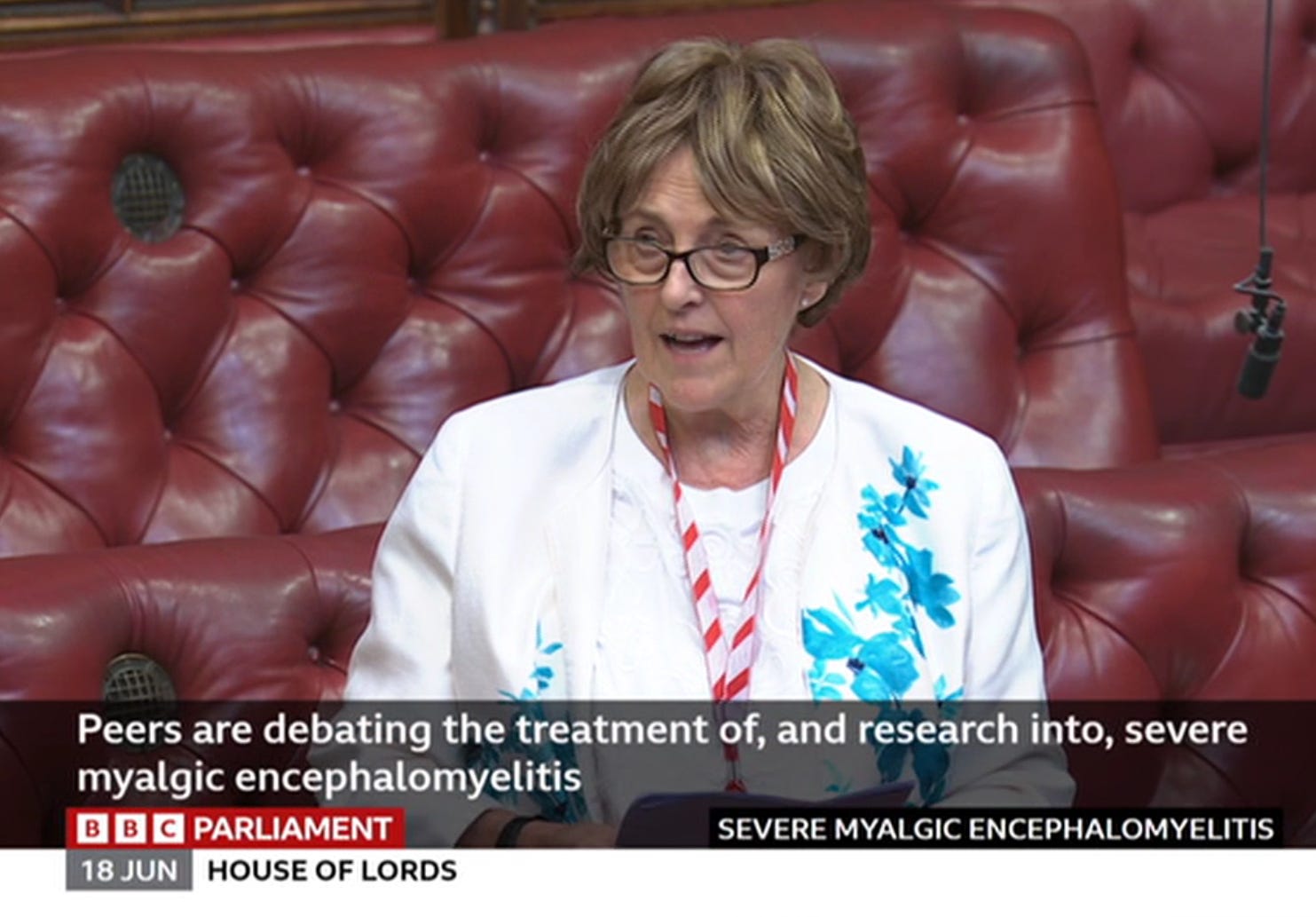
Elsewhere in Westminster, severe ME was debated in the House of Lords. Baroness Scott of Needham Market, who secured the debate, put it powerfully:
“ME isn’t just a matter of policy documents, clinical pathways or departmental responsibilities. ME is about lives changed beyond recognition.”
It’s heartening to see people affected by severe ME finally getting parliamentary airtime, and being centred in the discussion. The challenge, as ever, is turning words in the chamber into change on the ground. The debate is worth a watch if you are able.
Research round-up
We’re pleased to report that there’s been plenty happening in the research world lately. Highlights include:
The PRIME International Symposium, a two-day hybrid event exploring the latest developments in ME/CFS research. will take place on 28–29 September 2026. Registration is open now via Action for ME.
New research funding. The WE&ME Foundation has launched a call for ME/CFS research in collaboration with the Science for ME forum. They aim to fund seven projects, each with a budget of €120,000–180,000. Researchers from anywhere in the world can apply, with early-career researchers and applicants with career breaks explicitly encouraged to do so.
Sequence ME progress. Action for ME posted a webinar summarising progress on the Sequence ME and Long Covid programme, including participant recruitment, how UK government funding will support the next phase, and plans to identify biological subtypes through genomics.
News from Germany. The ME/CFS Research Foundation has published an update on Germany’s National Decade against Post-infectious Diseases. It’s worth a read to get the latest on the German government’s ambitious initiative. The first videos of talks from the 2026 Berlin conference are also now available on the ME/CFS Research Foundation’s website.
Recommended listening
Finally, if you’ve been looking for an addition to your playlist, we’ve got you covered. We’ve been enjoying the Visible podcast, which recently featured #ThereForME Ambassador Dr Binita Kane. In a moving and honest conversation, Binita discussed how her daughter’s illness changed how she practises medicine and thinks about post-viral illness. We can also recommend the Visible podcast’s recent overview of the current state of ME research.
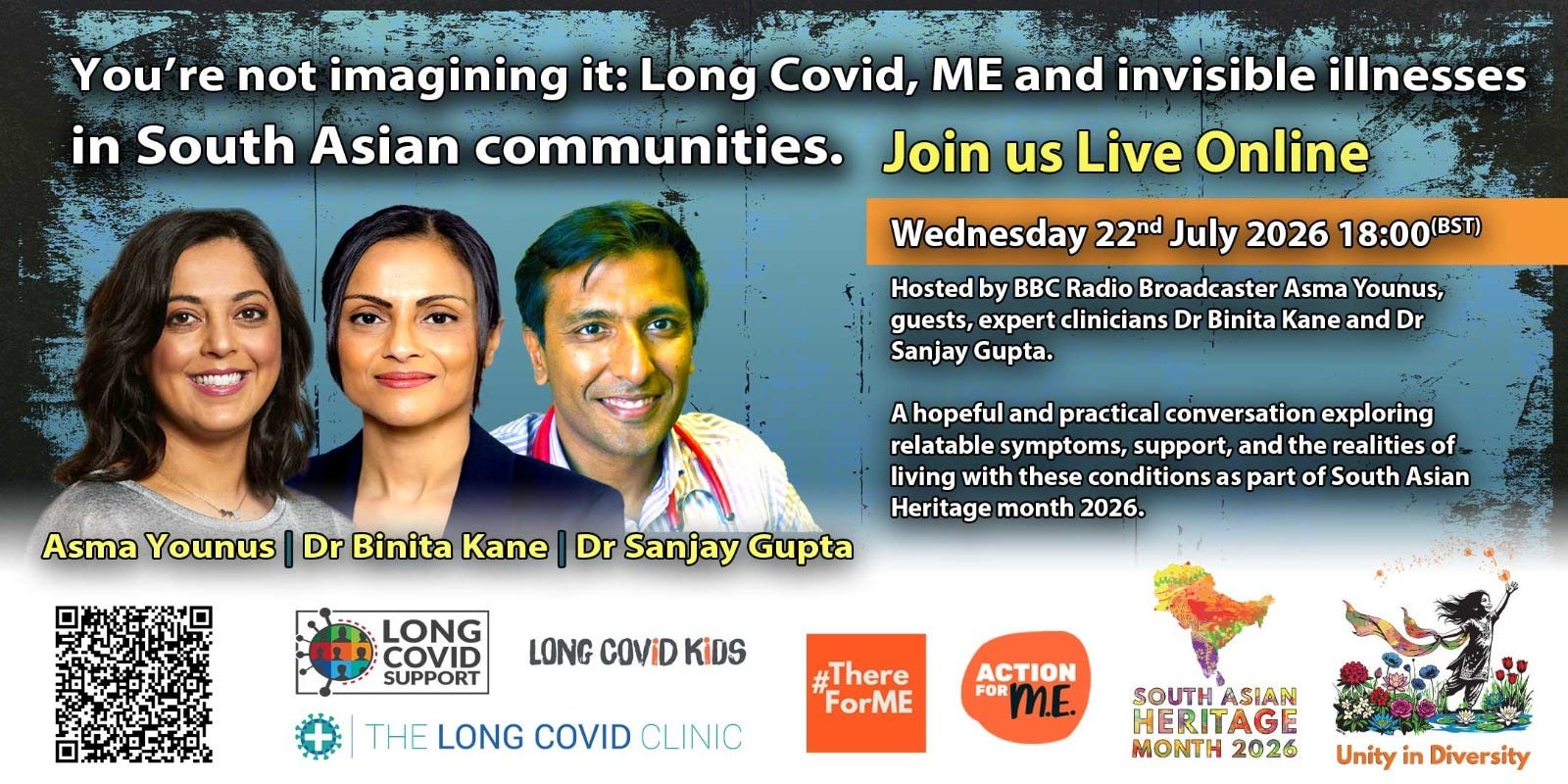
Binita’s been keeping busy! To mark South Asian Heritage Month, we’re proud to be supporting “You’re Not Imagining It: Long Covid, ME and invisible illnesses in South Asian communities” — a free live online event on Wednesday 22 July at 18:00 BST. Hosted by BBC radio presenter Asma Younus, the event brings together leading clinicians for a conversation about Long Covid, ME and other invisible illnesses.
And why is this so important? Research shows that white individuals are approximately five times more likely to be diagnosed with ME than those from South Asian, Black and other minority ethnic backgrounds — a disparity greater than for many other common diseases. These communities are not only missing out on diagnosis, but are also underrepresented in the research that will shape future treatments. Register for free on Eventbrite to find out more.
We’ll see you next week.
Thanks for all you're doing. :-