


Today’s guest post is from Jemma Bella, a chronic illness advocate and content creator, whose candid posts about living with Long Covid have resonated with hundreds of thousands of followers. Through storytelling, education and humour, she raises awareness of the realities of chronic illness and recovery. She now works for the health tech company Visible. Here she writes about how she began sharing her experience online and why her content resonated with so many.
I’m Jemma Bella - you may know me from my social media videos. I started posting content 3 years ago when I was in the depths of Long Covid. I now post videos of the hard parts, the slowly-getting-better parts, and everything in between.
In February 2023, I was a secondary school science teacher, working towards becoming an educational psychologist. I got a Covid infection which required a few days off school. As we are all taught to do, I pushed myself to get back to work. However, within 4 weeks, I found myself in a respiratory specialist’s office, and he was handing me a piece of paper that said I was ‘not fit to work’.
I moved back in with my parents so I could be looked after, and my world became four-walls small. I was diagnosed with Long Covid three months after the initial infection, which I know was fortunate, as many people spend years fighting for a diagnosis. The sick notes kept coming and so did the weird and wacky symptoms, including fatigue, derealisation, shortness of breath, palpitations and tinnitus.
I was too unwell to be in school, and the grief and guilt consumed me. I was completely lost at sea, and while my loved ones tried their best to understand what was going on for me, they couldn’t really get close.
How it started
A few months into my new reality, I found myself compelled to write. I started a blog where I would write down anything I was feeling and share it with my boyfriend and family, hoping this would finally reveal to them exactly how I was feeling. Although I had found some release in writing, I still felt completely and utterly isolated. And that is when social media comes in.
I had started to follow people with Long Covid, and later ME, online. I found it incredibly helpful to know that it was not just me going through this. I found lots of lovely accounts with similar stories, and seeing their content made me feel truly seen. I wanted to capture that same feeling and pass it on to others. I had always loved creating videos, so I decided to give it a go. In my first video, I listed the Long Covid symptoms I had. After that, I would make a video whenever I could. It became my only focus of the day and acted as a distraction through all the fatigue, pain and other symptoms.
Building a community
It turned out there were a lot of people in the same situation as me. The more videos I posted, the more comments, DMs, and emails I would get from other people living through a similar situation. It was both comforting and heartbreaking to hear about the invisible struggles others were experiencing. As the months went on, I started to gain more and more followers and this only motivated me to make more content. The kindness in those comment sections genuinely got me through some really hard days. I genuinely do not know where I would be without the community I slowly and accidentally built.
I am still not sure exactly why my content has resonated with so many people over the last few years. I guess it comes back to the same thing every time: people just wanting to feel less alone, and finding that in someone else’s story. Social media really is incredible as it can connect people that otherwise wouldn’t be connected: this is especially important for those with chronic illness who are not able to socialise the way healthy people can.
Anyone who knows me knows I’m an incredibly private person, and before getting unwell, the idea of oversharing on social media, especially as a teacher, would have made me feel physically sick. But when I found myself feeling so alone and wanting that connection, sharing on social media felt like the best way forward. Most of social media is a highlight reel, but as I didn’t have any “highlights”, I chose to share the honest, vulnerable stuff instead. It helped me process things: the grief that comes with chronic illness isn’t talked about or understood enough.
There were definitely groups I didn’t expect to connect with, like people with neurodivergence or mental health struggles. That’s when I started adapting my content to speak to those struggles too. It really surprised me how many people are quietly dealing with all sorts of things while feeling like they have to carry on and pretend everything’s fine. I think that’s why my page resonated—it offered a bit of validation and an outlet for people just trying to get through each day with something difficult going on underneath.
The need for understanding
A lot of my content also ended up being something people could share with their loved ones to help them understand, which is exactly why I started doing it: to help my own family and boyfriend understand what I was going through. A huge part of what I hear now is that my content doesn’t just validate and resonate with people themselves, but also helps the people around them understand a little better what they’re going through.
What did surprise me was just how many of these people didn’t have much support around them, and some were even struggling to be believed. They wanted to connect with someone who actually got it. Some people would comment on my videos saying things like, “if you’re well enough to make videos and be on social media, you’re obviously not that sick.” Many people really don’t understand what it’s like to live with energy limitations or a chronic illness.
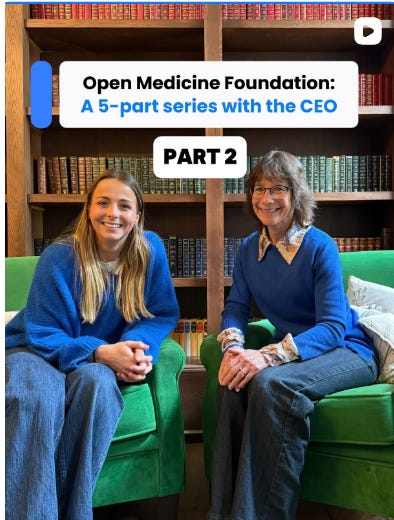
I am aware of the power a platform of my size holds, and I am still learning to navigate this wild terrain that is social media. Something I genuinely wrestle with is the line between sharing my story and it being my job. Brand deals can feel conflicting when the community you’ve built is rooted in something so personal. Over the last couple of years my platform has also opened doors I never expected. I have worked with the Open Medicine Foundation, creating videos and fundraising with them for ME and Long Covid. I’ve also joined the team at Visible, who found me through my social media page. I do not take for granted the fact that I have been able to turn something that started as a desperate attempt to feel less alone into something that actively contributes to research and advocacy.
I have been so lucky that the last year has been better for me, and although I can’t pinpoint one single thing that has ‘cured me’, I believe being in the privileged position to have been able to move to the countryside, slow down, work for myself, have two years of talking therapy, and get an ADHD diagnosis have all contributed in some way. I’m very aware that so many people in the ME and Long Covid community are still struggling in ways I can’t fully imagine and there is still so much work that needs to be done.
If I could say anything to the Jemma that first got unwell back in 2023, I would say this: “Even though it does not feel like it, nothing is more important than your health right now.” One reason my content may have resonated with so many people is simply this: I was saying things others desperately needed to hear, and this validation often wasn’t coming from the doctors or people in their lives.
Our thanks to Jemma Bella. Follow her here: