


Social care has made headlines lately following the appointment of our new Prime Minister, Andy Burnham. In our work with #ThereForME, we come across many people with ME and Long Covid who face challenges accessing social care support, as well as with the parallel NHS Continuing Healthcare (CHC) funding process. Today’s post shares the experiences of three contributors from across the UK.
Denied social care support in Scotland – Cass Macdonald
Cass, 51, is a former nurse who became ill with Covid in April 2020. They developed a severe case of Long Covid and were also diagnosed with ME/CFS. Cass had to medically retire and, having struggled with activities of daily living (ADLs) since 2020, was finally referred for a social care assessment by their GP in 2023. In May 2026, Cass received notification that their application did not meet the criteria for care support. Cass is currently going through the complaints and reassessment request process. Cass has no familial or relationship support for ADLs and is currently only supported by a cleaner for two hours once a week.
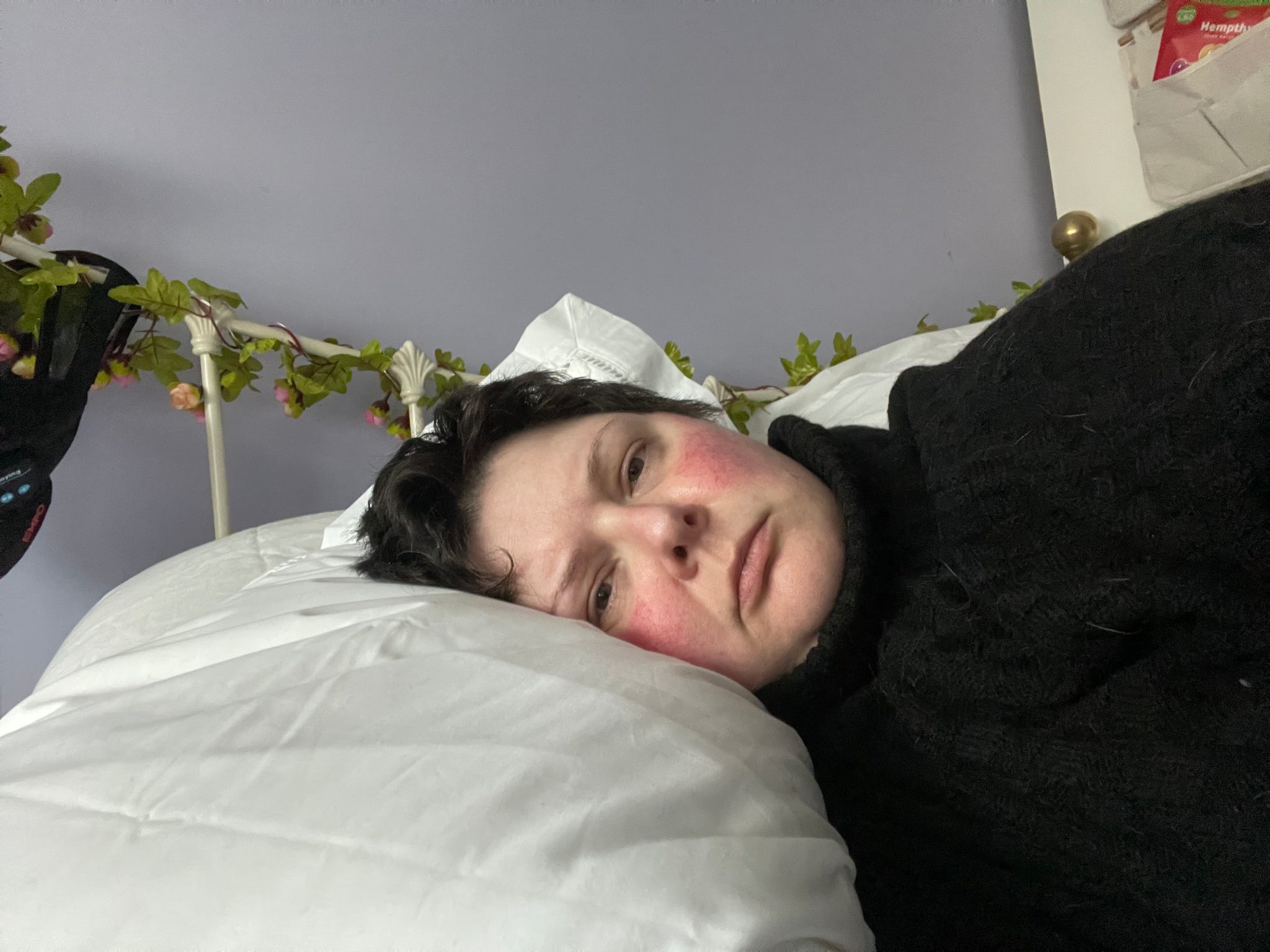
According to the criteria as they appear on the City of Edinburgh Council website, I meet many of the criteria in their “Substantial Risk” category: I am unable to carry out many personal care tasks and daily household chores, I am unable to sustain a job or learning, and I am now largely isolated from friends and family as I mostly cannot join them for celebrations. Even with careful planning, there is no certainty I will be able to follow through, and there will be significant symptom exacerbation and post-exertional malaise afterwards. I cannot leave the flat unless I am in my wheelchair, and with Ehlers–Danlos syndrome and increased frailty since becoming ill, I am at greater risk of falls. I am losing control of my home environment and am at risk of harm due to lack of input.
I waited three years to see a social worker. Initially, this was a duty social worker who came out after I raised a concern over the delay. It took a further year to be formally assessed. At no point was any proper assessment tool such as Karnofsky, DePaul or FUNCAP55 used to assess how my symptoms impact my functional capacity. According to online guidance, I should have been part of the social care assessment, just as with the separate occupational therapy assessment. Had they done the assessment properly, the outcome would have been vastly different. I think they walked in, made assumptions due to my age and ability to communicate, and decided I did not meet their criteria. They did not discuss all the options nor provide adequate information about them – again, in breach of guidance – let alone inform me of how to appeal or complain. At no time was my written permission sought nor was I shown any completed forms or reports.
Although my MSP (Member of the Scottish Parliament) is helping me, going through the complaint process requires a lot of energy and is causing further delay in accessing the support I need to live my life. Frank’s Law (covering social care) and NICE NG206 – clinical guidance on ME/CFS, which applies in Scotland – state what I am entitled to, so why do I have to fight for help? I know funding continues to be cut and need is rising, but rationing care affects lives.
Navigating bureaucracy in England – Marianne Lynch
Marianne is a freelance science and maths tutor who helps look after her beloved father, Brian, who has suffered a massive and sustained decline in health after contracting Covid in 2022. She has faced repeated dismissal regarding her father’s needs from both the NHS and local authority and now campaigns to improve services for those with Long Covid and associated conditions.
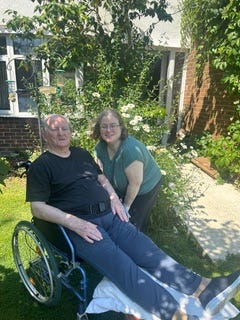
My father was 89 when he caught Covid in December 2022. Despite pre-existing heart conditions and mild dementia, he was still active, easily able to climb his stairs at home and sit in the garden chatting with friends for around two hours. He experienced a massive and sustained decline in health after the infection, which left him almost completely bedbound for months.
The infection marked the start of a nightmare, which is well described by the term “Kafkaesque” – “oppressive, nightmarish scenarios driven by nonsensical bureaucratic rules” – likely an apt description of the situation in which many people struggling to access health and social care for ME and Long Covid find themselves.
One of many absurd aspects of Dad’s struggle to get support was being refused access to the NHS Long Covid Clinic, as they claimed his heart conditions explained his debilitating fatigue. This means that, even after three years, he still does not have a formal diagnosis of Long Covid, despite his life being profoundly and permanently impacted by the infection.
He has needed 24-hour care since developing Long Covid as his cognition is now so impacted he cannot reliably use an alert pendant. However, assessors for both local authority and CHC funding will not acknowledge the devastating impact of his severe fatigue. It is vital that Dad receives care at home, to avoid the risk of reinfection and exacerbating his fatigue; however, this type of care is more expensive. The local authority claim the additional costs of remaining at home are a medical need, so they fund the same cost as a care home via direct payments and leave my family to make up the difference (in addition to Dad’s substantial mandatory contributions). They refuse to apply for partial CHC funding or fund this need via another route, leaving my father with an unmet need. I have applied for CHC funding independently, but the Integrated Care Board insists Dad’s needs can be fully met by a social care provider.
Another key element of a Kafkaesque situation is the loss of control, something I have felt in abundance as the people and organisations with the power to decide the funding for my father’s care lack any meaningful oversight. The only way to challenge their decisions is through lengthy appeals to an ombudsman. These could take months (maybe even years).
The final hallmark of our Kafkaesque nightmare is the sense of dread I feel each time I check emails or voicemails. I know how easy it would be for an assessor who does not understand Long Covid to reassess my father’s needs and cut the already inadequate funding for his care.
My only hope is that, through campaigning and telling Dad’s story, this nightmare will end.
Unsafe and excluded – Anonymous
Our third author chose to share their experiences anonymously due to an ongoing dispute with the local authority over their social care package. They developed severe ME symptoms after a Covid infection and have struggled to access adequate social care.
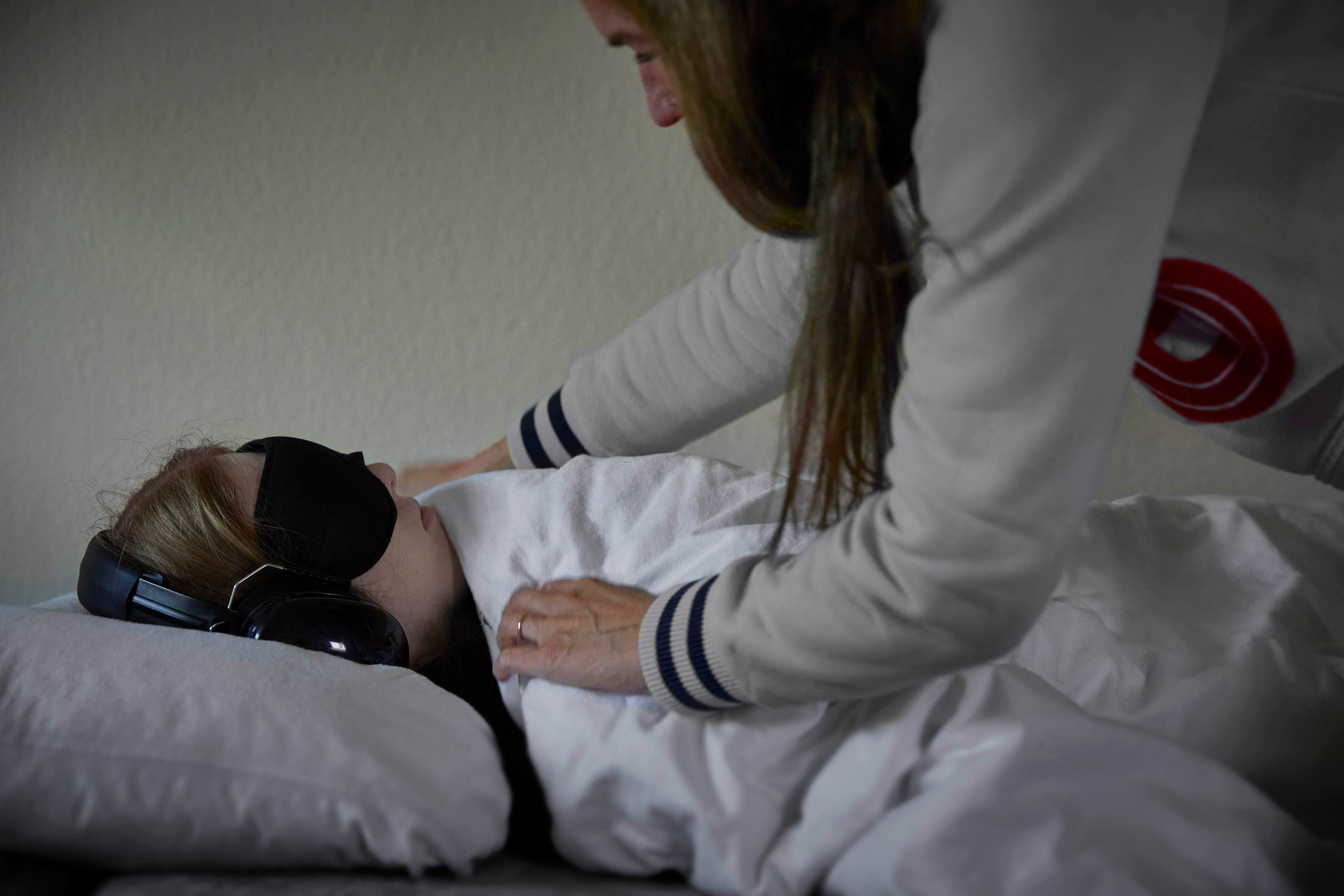
Before contracting Covid, I was dedicated to my career, fit, full of energy and life. For almost four years now, I’ve been stripped of my career, health and, in many ways, my life. Living with severe ME means that even sitting up, turning over or speaking can worsen my condition. Preventing that decline should be at the heart of social care. Instead, my experience of trying to access support has left me feeling unsafe, excluded from decisions and traumatised. It has also contributed to unnecessary deterioration in my health.
In October 2024, I was allocated a social worker. The initial assessment felt rushed but led to a protracted process, with evidence requirements that kept changing. I wonder whether I would have had to work so hard to provide clarification if I had been left bedbound and dependent on others by a well-understood condition.
Some of my worst experiences were with the reablement team, who offer support designed to help people regain their independence – for example, after a hospital stay. While reablement is focused on supporting people to do more, managing ME should be about supporting someone to rest, pace and ultimately do less (as outlined in the 2021 NICE guideline). Despite my reporting concerns that this kind of care was unsuitable, the reablement support lasted for seven weeks.
Throughout my time with the reablement team, I felt pressured into doing things that were beyond my capacity. When a carer from a reablement team looks at you and says, “Can’t you do that yourself?” they don’t recognise the desperation of someone who would give anything to do basic tasks independently or the strength it has taken to even ask them for help. Inaccurate notes from the team were later used to inform my Care Act assessment, resulting in a care package that did not meet my needs.
Months of precious energy that should have been spent preserving my health were instead spent repeatedly asking for help, educating professionals and retelling the worst parts of my life over and over again. Inadequate care has forced me to choose between things such as eating and washing, has deprived me of my dignity and left me with no option but to repeatedly push beyond what my body can safely tolerate. Repeated failures to listen to me, involve me in decisions and provide adequate support have directly contributed to my deterioration. I have gone from occasionally getting my own drink or attending the rare medical appointment to being completely isolated and dependent on others. With appropriate care and sufficient support, I believe I could still participate in life in small but meaningful ways.
How can the very service whose purpose is to promote wellbeing and independence have instead contributed to the loss of both?
We’re planning to return to experiences of social care in a future post. If you’d like to share your story, drop us a message (thereforme.uk@gmail.com).
It is heartbreaking and frightening to read these stories and see the extent to which health and social care professionals are ignorant of the basic hallmarks of ME/Long COVID. Although it may be difficult to believe how invisibly debilitating symptoms can be, particularly in the cases of younger, previously very active individuals, this very phenomenon has itself now been well documented. There is no reasonable explanation for the repeated and long term implementation of unhelpful therapies or dismissal of needs. Thanks to the #There for ME team for continuing to highlight this problem. Andy Burnham, this is one area where you can make meaningful and immediate change - listen to these voices and act now if you are truly committed to improving quality of life in the UK.
Trigger warning:
I personally know two friends with severe ME who, unable to access suitable care, took their own lives. Their families either didn’t care or understand or weren’t in a position to help. The final desperate solution was sought. Neither of them were depressed just couldn’t go on living as they were. A third friend starved to death as her partner had a breakdown and left and she was unable to call for help.
This is stark and beyond distressing. I’m guessing it’s the tip of the iceberg.