


Today’s guest blog is from friend of #ThereForME Tessa Munt, the Liberal Democrat MP for Wells and Mendip Hills (in Somerset). Since election in July 2024, she has been an active advocate for people with ME. Recent activities include securing a Westminster Hall debate (November 2025) and raising the case of Savannah Victora-May in Parliament (February 2026). In January 2026, Tessa was elected Chair of the All-Party Parliamentary Group (APPG) on ME but here she writes in her personal capacity.
I want to start by thanking all in the ME community who have encouraged me in my fight for proper provision for the estimated 1.35 million people living with ME nationwide. Whether you have raised the need for appropriate care, investment in research, fair treatment in the welfare system, or acknowledgement of the challenges young people with ME face, I appreciate all your messages and I’m sorry that I don’t always manage to provide a direct response.
I’m grateful to #ThereForME for the invitation to share some thoughts with you. In the 19 months since I took up my seat in Parliament, and since #ThereForME launched, we’ve repeatedly challenged the desperate situation facing those living with ME. Sadly, despite this, there has been too little change.
There must be change for ME
When I stood for election as MP, it was with a real sense that there were still so many issues facing people in my constituency where I could make a difference. ME is one of those and I was up for taking this on. I have heard from people in so many desperate situations – often caused by systemic failings. It’s as if there’s a collective inability across the board to appreciate and respond to the needs of those with ME. This cannot continue.
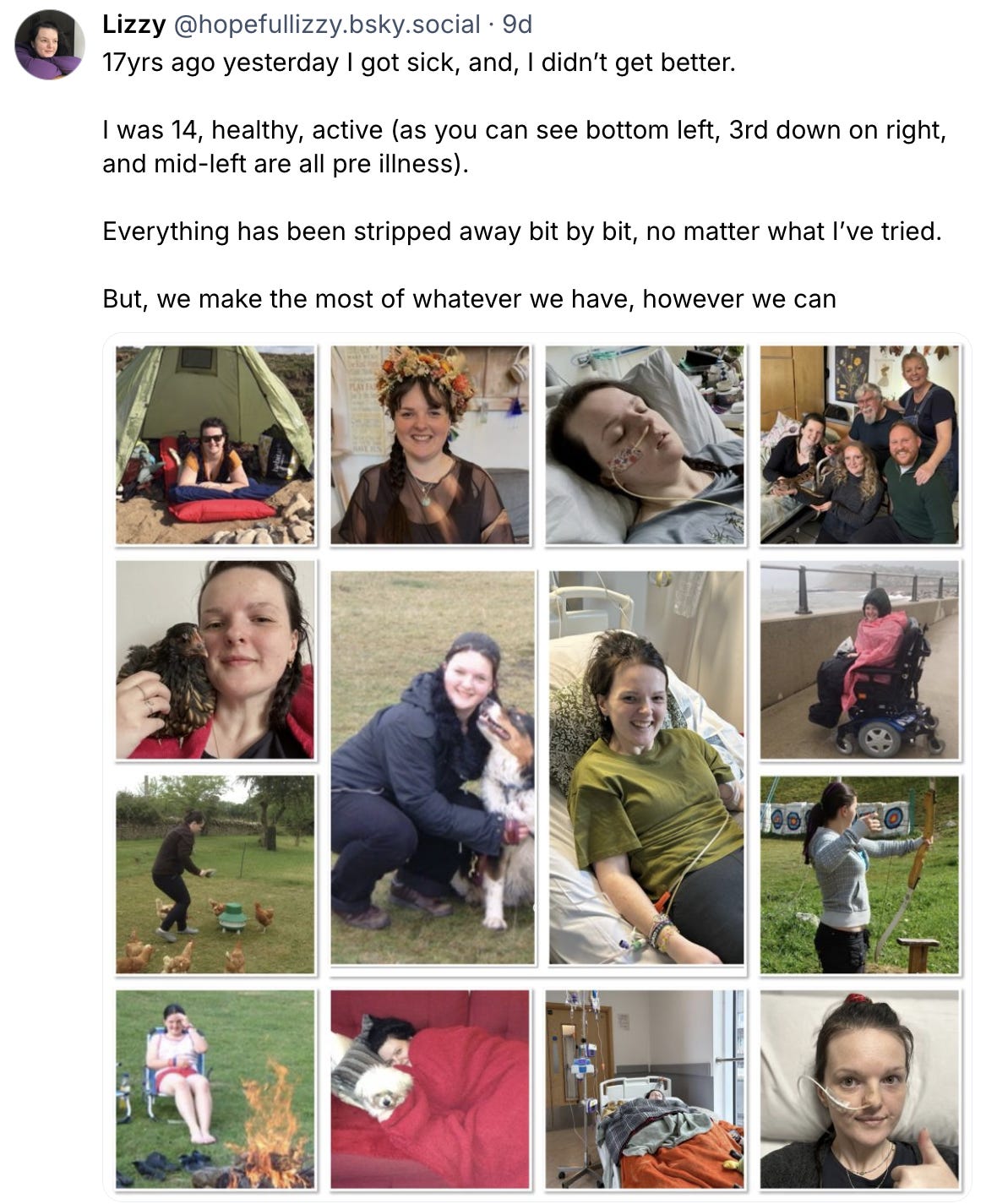
I wrote at Christmas that the decades-long neglect of people with ME is a great injustice. I’m still reeling at the numbers: best estimates are that 1.35 million in the UK live with ME or ME-like symptoms. Add in one or two family members or close friends who are affected by each situation and upwards of four million people in our country are personally touched by ME. Sadly, too many people with ME are sick for years, even decades, unable to live their lives – lives that once held so much promise. A member of the online community, @Hopefullizzy, captured this so powerfully and courageously in her post on the 17th anniversary of becoming unwell. I continue to marvel at how Lizzy and many others share their stories to such effect.
We are all so much poorer for ME: for the loss of years of healthy life, the demands and stress of long-term care, and the wider impact on our communities, country and economy. And yet, a government that emphasises its focus on the economy so often doesn’t seem to have looked at how much ME is costing us. Alarmingly, a Minister recently quoted a cost of £3.3 billion per year. However, this calculation relates to 2014-5, and doesn’t take into account the increase in numbers post-COVID or the high economic inflation of the 2020s. Current estimates of the cost are upwards of £22 billion per year. Compared with other health conditions, that’s huge. Last year’s Final Delivery Plan didn’t even consider the cost.
We need action from government
As a recent #ThereForME post brought home, the government is not invested in ME. The Final Delivery Plan lacked ambition. Furthermore, since its launch there’s been paltry progress in the few areas where it offered something potentially substantive. On care, a suggested draft service specification for mild and moderate ME (which Integrated Care Boards will be encouraged to use) has only just been shared for consultation. There is still nothing for those with severe ME. On specialised services for those with very severe ME, the Department has merely ‘commenced discussions.’
How about investment in research that could bring diagnostics and treatment to improve people’s lives and enable them to contribute more to our society and economy? Two of the Plan’s three announcements recycled previous commitments, whilst the third was limited to research grants of up to £200,000 (which will take years to have an effect). More worryingly, the government line remains that bids for ME must be in open competition with those for other diseases, for which research may be well established. This is not a level playing field and special cases have been made for other conditions, For example, the £50m over five years awarded to motor neurone disease. Or the £50m call, just weeks before the Delivery Plan’s launch, to build capacity to research cardiovascular disease.
There is something deeply unjust in the way that ME is treated. It is not good for our country when such a significant group is continually marginalised. I will keep pushing – currently I’m arranging a face-to-face meeting with Sharon Hodgson, the incoming minister with responsibility for ME. A new Minister may bring new opportunities.
How you can help bring about change
We need your voice and your words to form a part of the collective story. Here are my thoughts and suggestions.
Don’t give up: For many in the ME community, long years of illness have been accompanied by equally long years of indifference, gaslighting and the abuse of treating ME as a psychological condition. If I can say one thing to you in the face of this, it is this: please don’t give up. Many campaigns against injustice have only seen change after decades, succeeding simply by continuing until the external context has changed in their favour.
Take encouragement – many Parliamentarians are supportive: Since the 2024 general election, many MPs have acted on ME.
71 Liberal Democrat colleagues co-signed my letter to Secretary of State for Health and Social Care Wes Streeting.
Nearly 40 MPs have submitted Parliamentary Questions on ME, some on multiple occasions.
32 MPs have signed up to be part of the APPG on ME.
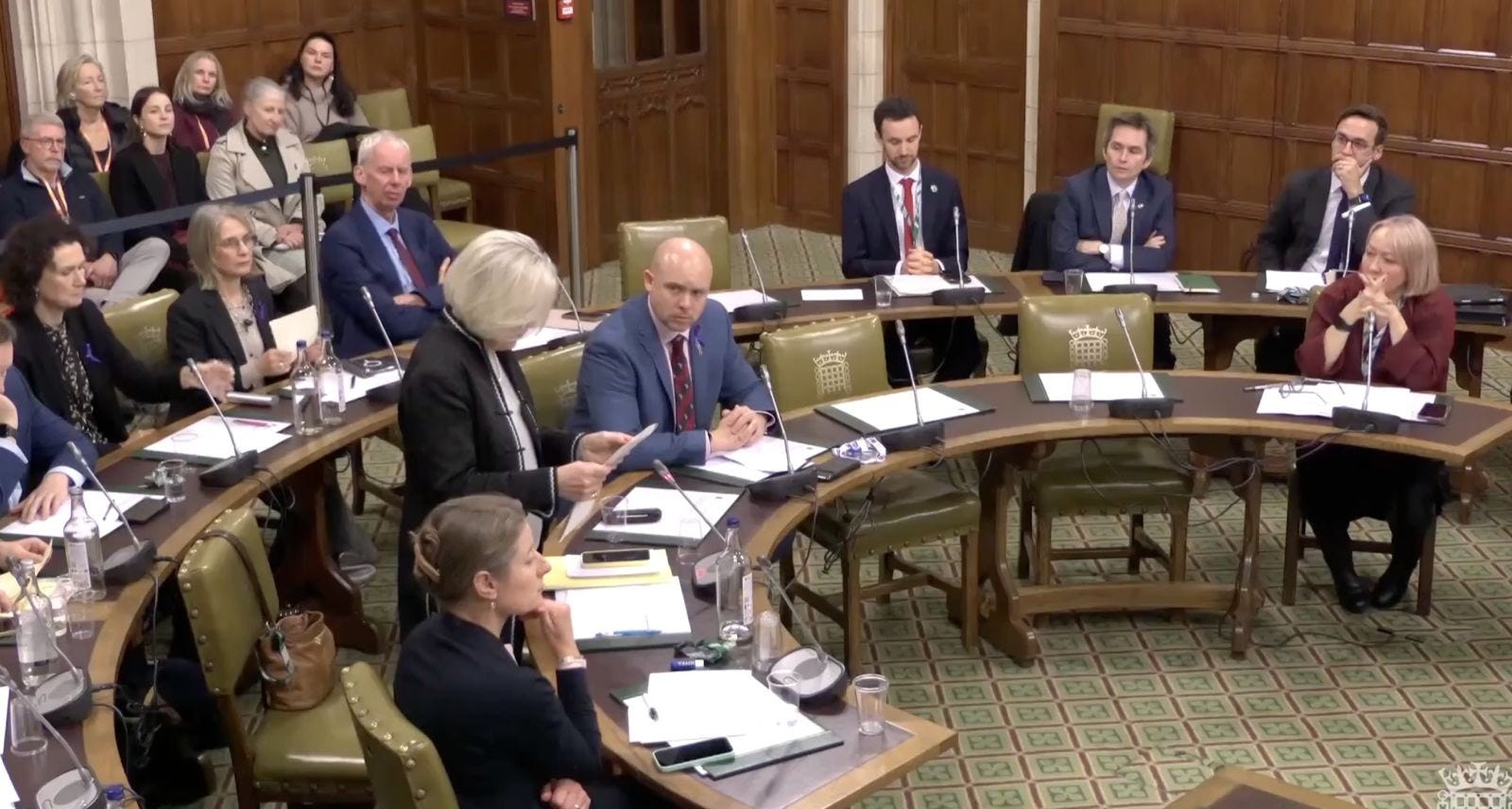
26 MPs attended the Westminster Hall Debate in November 2025.
This support comes from across parties and includes at least 30 Labour MPs. There are also numerous colleagues in the House of Lords who are keen to help.
Encourage your MP to be #ThereForME: We know that the government will change course under pressure. But for that to happen for people affected by ME, there need to be more MPs talking about their situations. It was striking how many MPs who attended the Westminster Hall Debate spoke of their constituents’ experiences. Many people affected by ME had written and urged their MPs to go. Here’s how you can help:
If you can, follow the social media of the various ME organisations and respond to their prompts for MPs to attend events.
If you are able to write, keep it succinct whilst relating to your experience. MPs receive hundreds of emails each day and even a compelling message may slip through. Don’t be afraid to try again.
If possible, speak to your MP. I typically hold three face-to-face surgeries across my constituency each week and commit to accommodating those who can’t attend through online calls and visits. Not all MPs are accessible but ask for a meeting and request accommodations if you need them. If you do get an opportunity, prepare well: work out what you want to get across, and what you want from the MP. Don’t be shy to take a supporter. MPs are human beings but face many demands from all directions, so a brief and moving story will often be more effective than a long tale that will leave you exhausted.
If the above feels beyond your energy limits, encourage someone close to you to reach out. Some of the people who have influenced me most about ME are parents who are desperate for their children’s lives to improve.
If you have a local ME group, consider approaching your MP together. In my constituency, Somerset NHS Fatigue Service organised for me to meet with members of peer support groups. That was very helpful, especially as members supported each other in the process.
Time for change
Those with ME have experienced years of being treated unjustly. Sometimes, it feels endless and irreversible. But remember this: getting things done in parliament starts with having MPs on your side. The next election looks tight and many MPs fear losing their seats; the results of the Gorton and Denton by-election will exacerbate this. So, talk numbers to your MP. The sheer magnitude of people affected may well be a wake-up call, not to mention the wider impact on the economy and the health service. We have the numbers, the stories and the potential support in parliament to make the difference.
I will be part of that, but I need many more colleagues across the house fired up and ready to play their part too. See what you can do to encourage that. If possible, make your story, however hard it may be to share, part of the change.

Thank you for advocating for us Tessa. I believe there are many more of us living in dark, silent rooms than anyone thinks. We've been ignored and brushed under the carpet for decades. I've been fighting the NHS for 43 years and have got precisely nowhere, my GP doesn't even understand how ME and my other illnesses affect me. I have no quality of life whatsoever, can't eat solid food, can't tolerate daylight or noise. It's a miserable existence and we need proper research.
THANK YOU. I have tears in my eyes reading this, and I am deeply grateful for your words of encouragement (hope is such a flight of fancy, though, isn't it? Vexing, it is!), and your advocacy on behalf of all those 'living' with M.E. as well as all those wonderful caregivers.