



Hello to our subscribers old and new. August brought Severe ME Awareness Day, and with it a new report, statements and calls for action on the needs of those most severely affected — much of it painting a picture that will be all too familiar to many of you.
We round up what was published to mark the day, some of the creative ways people are keeping ME and Long Covid visible year round, and, as ever, a few rays of light.
Severe ME Awareness Day
Charities, organisations, patients, and carers marked Severe ME Awareness Day on August 8th, aiming to highlight the unbearable suffering of those most severely affected by ME and the urgent need for action.
Action for ME and the 25% ME Group released a report following an inquiry, initially launched by the APPG on ME, into the experiences of people with severe and very severe ME across the UK. Drawing on evidence from people with lived experience, families, carers, clinicians, researchers and organisations, the report paints a bleak picture of unmet need, exclusion and harm. In a foreword to the report, Tessa Munt MP, Chair of the APPG on ME, wrote:
“What struck me most forcefully throughout this inquiry was the stark injustice at its heart: those who are the most seriously ill are often the least able to access care. Instead, the burden falls – unseen and unsupported – on family carers, many of whom are providing complex and highly skilled care under immense pressure, without training, guidance, or respite.”
On behalf of their member organisations, Forward ME released a statement as well as a copy of a report shared recently with DHSC and NHS England. This included proposed interim measures to improve the safety and quality of support for people with very severe ME while longer-term solutions are determined. Our team contributed to this document and we endorse its recommendations.
Wider awareness efforts
Of course, every day is an opportunity to raise awareness of ME and related conditions. It was fantastic to see Darren Parkinson’s story covered recently by the BBC, who picked up his call to new Prime Minister, Andy Burnham to improve the support available for people with Long Covid. Darren explained:
“My message to the new prime minister and his government is really clear - do more to support people living with long Covid and invest more money for research to hopefully find a cure for this horrendous condition.”
We’re also pleased to share that the Mirrorbox Journey will continue in Autumn 2026, taking messages from people living with ME and Long Covid back to the places they love but can no longer reach. The Mirrorbox is a nationwide art project raising the visibility of ME and Long Covid. At each location, people can step inside the Mirrorbox and listen to a message from the person who has chosen that place. They can write a postcard back, creating a connection between those absent and present.
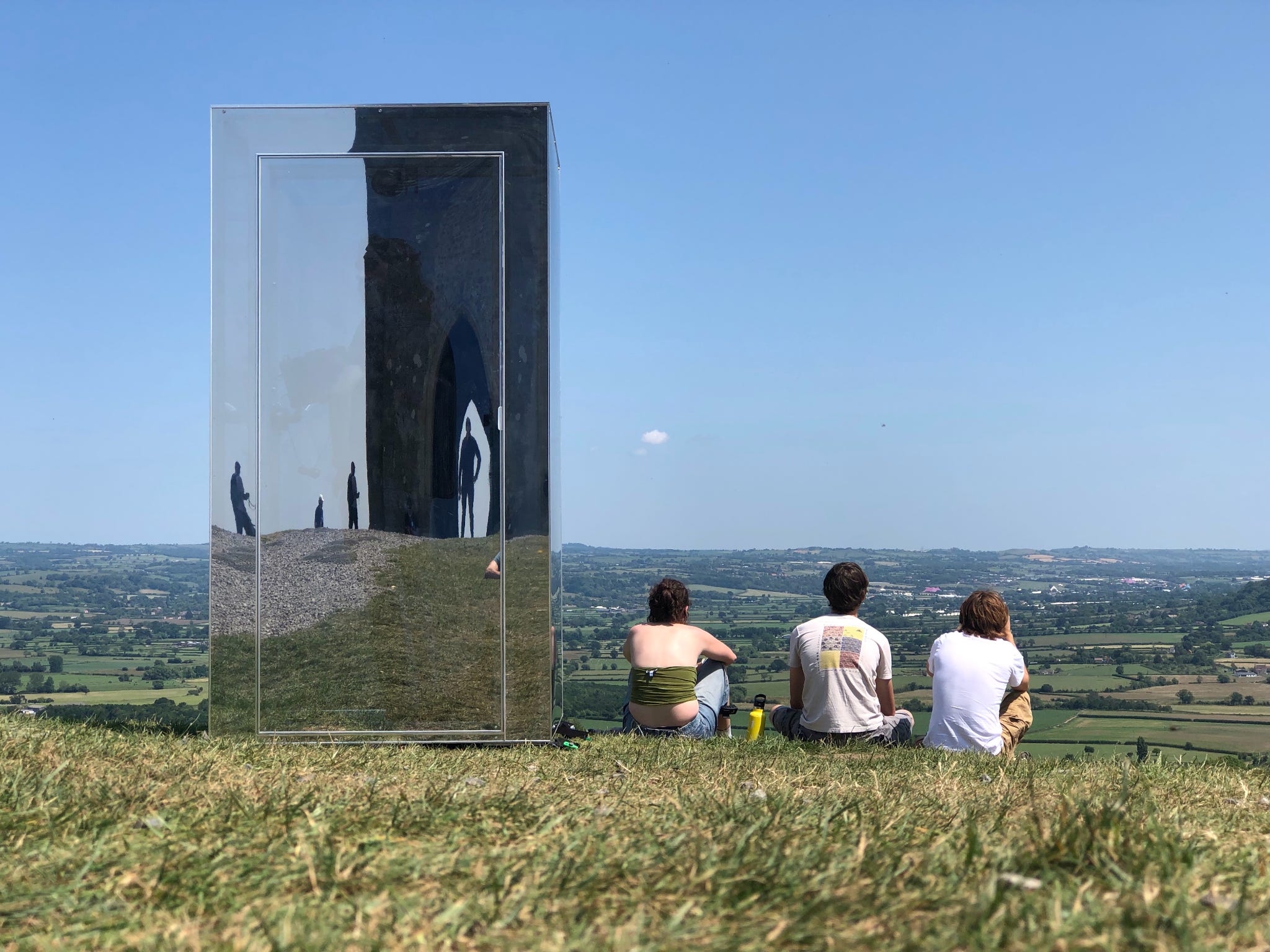
The Mirrorbox at Glastonbury Tor, Somerset. Photo credit: James Hankey.
During the Mirrorbox’s first journey last year, hundreds of people visited, listened to messages and wrote postcards back. The artwork is a unique way of raising awareness and understanding of so many of us living with ME and Long Covid, absent and invisible from spaces across the UK. The Journey begins at the Royal Opera House in London on 12–13 September, before travelling to locations across the country, from Jubilee Square in Brighton, to Robin Hood’s Bay in North Yorkshire (you can find the full schedule here).
Also using art to raise awareness, a shoutout to Katie (who has severe ME), who shared with us her series of collages highlighting the dire experiences people with severe ME have of healthcare. Through the collages, she demonstrates how, years after its publication, the 2021 NICE Guideline for ME/CFS is still not being followed within healthcare, and the devastating impact for individuals.
Dutch filmmaker and patient-advocate Anil van der Zee was awarded a knighthood in the Netherlands last week for his efforts, whilst being severely ill, to raise awareness of ME. Huge congratulations from all of us at ThereForME! If you haven’t already seen Doctors as Patients, we can recommend it.
Rays of light
We’ll leave you with three rays of light. First, we were delighted to see Tessa Munt MP’s recent letter to James Frith MP, newly appointed as the Minister for Health Innovation, with responsibility for ME. Tessa congratulated Frith on his new appointment, sharing five priority areas for action: getting better numbers (an issue explored recently by our co-founder Emma); understanding the economic cost; research to develop diagnostics and treatment; changing detrimental attitudes, knowledge and practice; and providing a national specialist service for very severe ME.
In August, we were also pleased (and impressed) to see the Young Liberals annual summer conference pass a policy motion elaborating “A Fair Deal for those living with ME, Long Covid and related conditions”. Katharine Macy, President of the Liberal Democrat Disability Association (the LDDA), told us:
“People with ME and Long Covid deserve better, and hopefully this motion is just the first step of the marathon we need to get there. This motion complements all the work we have been doing at LDDA to raise awareness of these hidden conditions.”
A big shoutout to Emerson Fawcett, who proposed the motion, and to #ThereForME volunteer Jonah Weisz for his support in drafting it.
Finally, for those for whom our recent post on social care resonated, we’re sharing the Casey Commission’s Big Conversation on Care. The Big Conversation - a key part of the government’s push on social care - includes an online platform to share your ideas on how social care can be improved, vote on other people’s suggestions and join the online conversation. We’ve been pleased to see the government in listening mode on social care and hopeful this may translate into solutions grounded in lived experience. If you have the energy, we’d love to see the needs of people with ME and Long Covid reflected in the Big Conversation on Care, as well as your ideas for change.
We’ll see you next time.
Trigger warning:
I personally know two friends with severe ME who, unable to access suitable care, took their own lives. Their families either didn’t care or understand or weren’t in a position to help. The final desperate solution was sought. Neither of them were depressed just couldn’t go on living as they were. A third friend starved to death as her partner had a breakdown and left and she was unable to call for help.
This is stark and beyond distressing. I’m guessing it’s the tip of the iceberg.